
Evaluating Public Schools

This section provides tools to aid in finding the best public school option for your child. Compare private and public schools, explore school zoning issues, and delve into the public school grading and ranking system. Find information on the safest schools and what they are doing right.

View the most popular articles in Evaluating Public Schools:

Screen Time, Paper Learning, and the New Back-to-Basics Debate

Updated
|
Screen Time, Paper Learning, and the New Back-to-Basics Debate
Explore why some public schools are reducing screen time, bringing back paper learning, and rethinking the balance between technology and traditional instruction.

Over the past decade, classrooms across the United States have become increasingly digital. Laptops, tablets, interactive whiteboards, and online learning platforms have transformed how students complete assignments, communicate with teachers, and access educational resources. During the COVID-19 pandemic, technology became an essential part of learning, accelerating one-to-one device programs in districts nationwide.

Now, however, many educators are asking a different question: Has classroom technology become too dominant?

Rather than abandoning educational technology altogether, a growing number of school districts are reassessing when screens genuinely enhance learning and when traditional methods, such as printed books, handwritten notes, and paper assignments, may produce better educational outcomes. This shift has sparked what many educators describe as a "back-to-basics" movement that emphasizes intentional technology use instead of constant screen exposure. Recent reporting by the Associated Press has highlighted renewed debates over the educational value of screen-heavy instruction and growing interest in balancing digital tools with traditional learning practices.

For families trying to understand these changes, the goal is not choosing between technology and paper. Instead, it is understanding how schools can combine both approaches to maximize student learning.

Why Schools Are Reconsidering Screen Time

Educational technology remains an important classroom resource. Digital platforms allow teachers to personalize instruction, provide immediate feedback, accommodate different learning styles, and prepare students for a technology-driven workforce.

At the same time, researchers and educators have raised concerns that excessive screen use may affect attention, reading stamina, handwriting skills, and student engagement. Studies comparing paper

. . .read more

School Safety Beyond Lockdowns: What Parents Should Review

Updated
|
School Safety Beyond Lockdowns: What Parents Should Review
Learn how to evaluate a public school's safety beyond lockdown drills, including school climate, emergency planning, mental health support, and communication.

For many parents, the phrase "school safety" immediately brings to mind lockdown drills and security cameras. While these measures remain important, they represent only one part of what makes a school truly safe. Today's public schools face a broad range of challenges, from severe weather and medical emergencies to bullying, mental health concerns, cybersecurity threats, and unauthorized campus access. As a result, the most effective schools have adopted comprehensive safety strategies that go far beyond preparing for a single type of emergency.

Families evaluating public schools should look beyond visible security features and ask how a school creates an environment where students feel physically secure, emotionally supported, and confident that adults will respond appropriately when concerns arise. A strong safety program balances preparedness with prevention, helping students thrive without creating an atmosphere of fear.

Before visiting schools, parents may find it helpful to read Understanding School Safety Policies in 2026, which explains how modern safety plans combine emergency preparedness with student wellness and prevention strategies.

Look Beyond Physical Security

Locked entrances, visitor check-in systems, surveillance cameras, and secure classroom doors are now common features in many public schools. While these physical safeguards are important, they should be viewed as part of a broader safety framework rather than the sole indicator of a school's preparedness.

Parents should ask how visitors are screened, how exterior doors remain secured during the school day, and whether staff receive ongoing training on safety procedures. A well-maintained campus also demonstrates attention to

. . .read more

Gifted, Honors, and Advanced Tracks: Are They Accessible or Just Advertised?

Updated
|
Gifted, Honors, and Advanced Tracks: Are They Accessible or Just Advertised?
Learn how to evaluate gifted, honors, and advanced academic programs in public schools, including admission criteria, equity, and the questions every parent should ask.

Walk through the website of almost any public school district, and you'll likely find references to gifted education, honors classes, accelerated learning, or advanced academic pathways. These programs promise rigorous coursework, intellectual challenges, and opportunities for students to reach their full academic potential. Yet for many parents, one important question remains unanswered: Are these programs genuinely accessible to qualified students, or are they simply attractive features highlighted in school marketing materials?

The answer often depends on much more than whether a program exists. Admission requirements, identification methods, teacher recommendations, scheduling, transportation, and ongoing support all influence whether students can realistically participate. A school may advertise a robust gifted program, but if only a small percentage of students ever gain access, families deserve to understand why.

As districts continue expanding academic pathways to meet the needs of diverse learners, parents should look beyond promotional brochures and school websites. Asking thoughtful questions about how advanced programs actually operate can help determine whether these opportunities are meaningful educational experiences or simply impressive descriptions on paper.

According to the National Center for Education Statistics (NCES), schools across the country continue working to improve academic outcomes while expanding access to challenging coursework for students with varying educational needs.

Understanding the Different Types of Advanced Programs

Although the terms "gifted," "honors," and "advanced" are often used interchangeably, they frequently describe very different educational opportunities.

Gifted education is generally designed for students who demonstrate exceptional academic ability or intellectual potential. Depending on

. . .read more

When Absenteeism Signals a School Fit Problem

Updated
|
When Absenteeism Signals a School Fit Problem
Learn when student absenteeism may point to a school fit problem and how parents can respond constructively.

Missing school occasionally is part of childhood. Illness, family emergencies, and unexpected circumstances happen. But when absences become frequent or follow a recognizable pattern, they may be telling parents something more important than simply, "My child doesn't want to go to school."

Chronic absenteeism has become one of the most significant challenges facing public schools since the pandemic. The U.S. Department of Education defines chronic absenteeism as missing 10 percent or more of the school year for any reason. In a typical 180-day school year, that means about 18 days of missed instruction. While attendance interventions often focus on improving habits and removing logistical barriers, parents should also consider whether frequent absences reflect a deeper issue with the student's school experience.

Sometimes, absenteeism is not simply about avoiding school. It is about avoiding a learning environment that no longer feels like the right fit.

If you are concerned about the academic impact of missed instructional time, Public School Review's guide to consistent school attendance and academic success explains why regular attendance remains one of the strongest predictors of long-term student achievement.

What Is a School Fit Problem?

A school fit problem does not necessarily mean a school is ineffective. A highly rated school can still be the wrong environment for an individual student.

School fit refers to how well a student's academic needs, personality, learning style, interests, and social development align with the school's culture and educational approach. When those factors become misaligned, students often begin showing subtle signs of

. . .read more

The Middle School Transition: Questions Parents Should Ask Before Sixth or Seventh Grade

Updated
|
The Middle School Transition: Questions Parents Should Ask Before Sixth or Seventh Grade
Help your child succeed in middle school by asking the right questions before sixth or seventh grade. Learn what to ask about academics, safety, and student support.

For many families, the move to middle school is one of the biggest transitions in a child's education. Whether your district begins middle school in sixth or seventh grade, students suddenly face new academic expectations, multiple teachers, larger campuses, changing friendships, and greater independence. While this transition is exciting, it can also be overwhelming.

The months before middle school provide an excellent opportunity for parents to gather information and prepare their children for success. Rather than waiting until orientation day, asking thoughtful questions early can help you understand what to expect and determine whether your child will have the support needed to thrive.

As you prepare for this next step, focus on learning about the school's academic programs, student support services, safety practices, and overall culture. The answers you receive will provide valuable insight into your child's future learning environment.

Why the Middle School Transition Matters

The transition to middle school represents much more than moving to a different building. Students are entering a stage of rapid academic, emotional, and social development. Instead of spending the day with one classroom teacher, they often rotate among several teachers, manage lockers, follow more complex schedules, and balance increasing homework responsibilities. At the same time, early adolescence brings new social pressures and growing expectations for independence.

Research from the U.S. Department of Education has consistently shown that successful school transitions contribute to improved academic achievement, attendance, and student well-being. Preparing children for these changes before the school year

. . .read more

Recent Articles

Media Literacy as a Core Skill: How to Tell if a School Teaches It Well
Learn how to evaluate whether a public school teaches media literacy effectively, from fact-checking and source evaluation to digital citizenship and critical thinking.
Screen Time, Paper Learning, and the New Back-to-Basics Debate
Explore why some public schools are reducing screen time, bringing back paper learning, and rethinking the balance between technology and traditional instruction.
Student Data, AI Tools, and Privacy: Questions to Ask Your District
Learn how public schools use AI, protect student data, and the key privacy questions every parent should ask their school district in 2026.

Evaluating Public Schools

SCHOOL ZONING
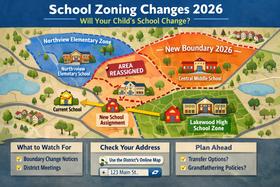
Learn more about zoning rules, how they impact schools and your child. This section offers information on the history of school zones, what they are, and how they work. Get information on who decides school boundaries and the impact those decisions have on the community.
GETTING STARTED
An overview of school designations, best practices for evaluating your options, and tips on choosing the best school for your child. Learn about Blue Ribbon, Vocational and Special Education schools. Get tips on finding the right school in a new neighborhood, city or state.
GRADING AND RANKING SCHOOLS
Explore the public school grading/ranking system, how it works and what it means. Get latest national rankings and read what critics of school grading have to say. Take a look at the nation’s top performing schools as ranked by U.S. News and Newsweek.
PUBLIC SCHOOL SAFETY
A comprehensive look at the safety of US public schools. Learn what schools are doing to combat gangs and drugs, prepare for natural disasters, and protect your children from predators. From web cameras to armed guards, see what tools public schools are employing to keep kids safe.
PUBLIC VS. PRIVATE SCHOOLS
A comparison of public and private schools, the pros and cons of each, and a look at the cost of getting a stellar education at both. Take a look at some of the most expensive schools, notable public school alumni, and learn more about “private” public schools.