
Parenting and Learning Issues

Each child learns differently. Here we offer resources on learning styles and the classroom models that support them, expert advice on how to improve learning, and tips on parental involvement.

View the most popular articles in Parenting and Learning Issues:

Algebra Readiness: What Parents Should Ask Before Middle School

Updated
|
Algebra Readiness: What Parents Should Ask Before Middle School
Discover how to determine if your child is ready for algebra before middle school, including the questions parents should ask and the skills students need to succeed.

For many students, the transition to middle school marks a significant milestone in their mathematical education. The shift from arithmetic to algebra is more than just learning to solve equations with variables. It represents a new way of thinking, one that requires students to recognize patterns, solve multi-step problems, and apply logical reasoning to unfamiliar situations.

Parents often assume that strong report card grades in elementary school automatically mean a child is ready for algebra. While good grades certainly help, they do not always reflect a student's depth of understanding. Algebra requires students to think conceptually, explain their reasoning, and apply mathematical ideas in new contexts. A child who excels at memorizing procedures may still struggle when faced with more abstract mathematical thinking.

Because algebra serves as the foundation for geometry, Algebra II, calculus, statistics, and many science and technology courses, it is worth taking the time to understand how your child's school prepares students before they enter middle school. Asking thoughtful questions now can help identify strengths, address potential learning gaps, and ensure your child begins this important transition with confidence.

According to the National Center for Education Statistics (NCES), improving mathematics achievement remains a national priority, making strong foundational instruction during the elementary years more important than ever.

Algebra Starts Before Students Ever Take Algebra

Although formal algebra classes often begin in middle school, algebraic thinking develops much earlier.

Every time an elementary student identifies a pattern, compares numbers, explains how they solved

. . .read more

How to Evaluate Reading Instruction in Your Zoned Elementary School

Updated
|
How to Evaluate Reading Instruction in Your Zoned Elementary School
Learn how to evaluate reading instruction in your neighborhood elementary school by recognizing effective literacy practices, asking the right questions, and understanding what quality reading instruction looks like.

Choosing an elementary school is one of the most important decisions parents make, especially when their child is just beginning the journey toward becoming a confident reader. For many families, the assigned neighborhood public school is the obvious choice because of convenience and community ties. However, not all reading programs are created equal, and understanding how literacy is taught can provide valuable insight into the quality of education your child will receive.

Reading is the foundation for success in nearly every academic subject. Children who develop strong literacy skills in the early grades are better equipped to understand increasingly complex material in science, mathematics, social studies, and writing. Those who struggle with reading often find it difficult to keep pace as classroom expectations increase.

According to the National Center for Education Statistics (NCES), fourth-grade reading achievement remains below pre-pandemic levels nationwide, highlighting the importance of effective reading instruction during the elementary years. Parents who understand what to look for can make more informed decisions when evaluating their neighborhood school.

Why Reading Instruction Matters

Learning to read is much more than recognizing words on a page. Effective literacy instruction teaches children how language works while helping them develop vocabulary, comprehension, critical thinking, and a lifelong appreciation for books.

During kindergarten through third grade, children are learning how to read. Beginning around fourth grade, they transition to reading in order to learn. If foundational skills are weak, students often struggle across every subject because reading becomes the

. . .read more

Parental Involvement in Public Schools: 2026 Update

Updated
|
Parental Involvement in Public Schools: 2026 Update
Explore the latest 2026 trends, research, and strategies shaping parental involvement in public schools and student success.

Parental involvement in public schools continues to be one of the strongest predictors of student success. While the core principle remains unchanged, the way families engage with schools has evolved significantly in recent years. In 2026, schools are placing greater emphasis on meaningful partnerships, digital communication, equity-focused outreach, and family participation in decision-making.

As public schools navigate academic recovery efforts, student mental health concerns, school safety initiatives, and rapid technological change, effective family-school collaboration has become more important than ever. Research consistently shows that students benefit when parents remain actively engaged in both school activities and learning at home.

This 2026 update examines the latest trends in parental involvement in public schools, highlights emerging best practices, and offers practical guidance for families and educators.

Why Parental Involvement Still Matters

Decades of educational research demonstrate that parental involvement is associated with:

  • Higher academic achievement
  • Improved attendance
  • Better classroom behavior
  • Increased graduation rates
  • Stronger social-emotional development
  • Greater student motivation

Recent Public School Review coverage on Parental Involvement and Public School Outcomes highlights how family engagement influences not only academic performance but also overall school climate and student well-being.

In 2026, educators increasingly view parents as partners rather than spectators. The most successful schools create structures that encourage ongoing collaboration instead of limiting engagement to occasional conferences or volunteer opportunities.

The State of Parental Involvement in 2026

Several trends are reshaping parental involvement in public schools.

1. Digital Communication Has Become the Norm

Most districts now rely on integrated

. . .read more

How to Support Your Child’s Mental Health at School

Updated
|
How to Support Your Child’s Mental Health at School
Practical guidance for parents and educators on supporting child mental health during the school year, with expert strategies and 2026 insights.

Supporting a child’s emotional well-being has become an essential part of academic success. In today’s school environment, students are managing academic pressure, social dynamics, digital exposure, and increasingly complex expectations. As a result, understanding how to support your child’s mental health during the school year is no longer optional for parents and educators. It is a core part of helping students thrive both inside and outside the classroom.

In 2026, schools across the United States continue to expand mental health services, including school-based counseling, telehealth partnerships, and social-emotional learning programs. However, the most effective support still begins at home, where children spend most of their time and develop their strongest emotional foundations.

This article explores practical, research-informed strategies parents and educators can use to recognize stress, build resilience, and connect children with the support they need.

Why Mental Health Support Matters in the School Year

Child and adolescent mental health directly affects learning outcomes, attendance, behavior, and long-term development. According to the Centers for Disease Control and Prevention, mental health conditions are among the most common health challenges affecting school-aged children, and early support significantly improves outcomes.

The school year introduces predictable stressors, including:

  • Academic testing and performance pressure
  • Social adjustment and peer relationships
  • Extracurricular demands and scheduling overload
  • Transitions between grade levels or schools
  • Increased screen time and digital comparison

In 2026, educators are also reporting greater awareness of “always-on stress,” where students feel pressure not just during school hours but throughout the day due to

. . .read more

10 Major Challenges Facing Public Schools in 2026

Updated
|
10 Major Challenges Facing Public Schools in 2026
Explore 10 major challenges facing public schools in 2026, from funding gaps to teacher shortages, with insights for parents and educators.

Public schools remain the backbone of the American education system, serving more than 49 million students nationwide. Yet the list of challenges facing public schools continues to evolve. In 2026, these challenges are shaped by post-pandemic realities, rapid technological change, and shifting societal expectations.

For parents, educators, and policymakers, understanding these issues is essential to making informed decisions and advocating for meaningful improvements. Below is an updated look at the 10 major challenges facing public schools today, along with context and practical insights.

1. Unequal School Funding

Despite ongoing reform efforts, funding disparities persist across districts. Schools in affluent communities often benefit from stronger property tax bases, while under-resourced districts struggle to meet basic needs.

According to the National Center for Education Statistics, funding gaps remain one of the most significant contributors to inequitable outcomes.

These disparities affect:

  • Class sizes
  • Access to advanced coursework
  • Availability of extracurricular programs
  • Facility quality

For a deeper look at how funding impacts school quality, see Public School Funding: The Basics.

2. Teacher Shortages and Burnout

Teacher shortages have intensified since 2020 and remain a pressing concern in 2026. Many districts face difficulties recruiting and retaining qualified educators, particularly in:

  • STEM subjects
  • Special education
  • Rural and high-poverty areas

Burnout continues to drive attrition. Increased workloads, behavioral challenges, and administrative demands contribute to job dissatisfaction.

The U.S. Department of Education has identified teacher retention as a national priority, yet solutions vary widely by state and district.

3. Learning
. . .read more

Recent Articles

What Rising E-Bike and Traffic Concerns Mean for School Commutes
Discover how rising e-bike use and increasing traffic are changing school commutes, and what parents should evaluate before choosing a public school.
School Safety Beyond Lockdowns: What Parents Should Review
Learn how to evaluate a public school's safety beyond lockdown drills, including school climate, emergency planning, mental health support, and communication.
How to Judge Special Education Capacity Before You Enroll
Learn how to evaluate a public school's special education capacity before enrolling your child, from staffing and IEP implementation to inclusion and support services.

Parenting and Learning Issues

IMPROVING LEARNING
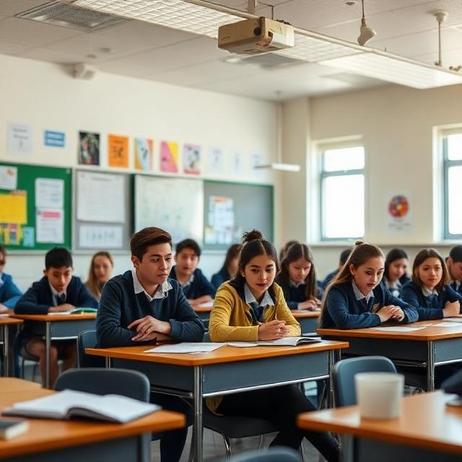
A comprehensive look at the latest trends, expert advice and recent studies into improving student learning. Explore the latest studies into links between student performance, sleep and music. See why schools are opting for later start times and year round schedules.
PARENTAL INVOLVEMENT FROM K-12
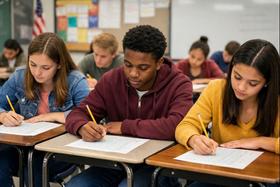
Learn how direct involvement in your child’s education can impact school performance. Get expert advice on how to get involved, learn why and when you need to talk to a teacher and ways to make changes on campus.
BULLYING
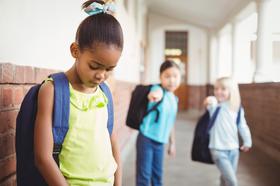
An overview of bullying in schools, laws to protect students, and the impact on education. This section provides great tips on protecting your child from being bullied or becoming a bully. Learn about the latest anti-bullying laws and see how cyber-bullying effects your child’s school performance.
TYPES OF LEARNING
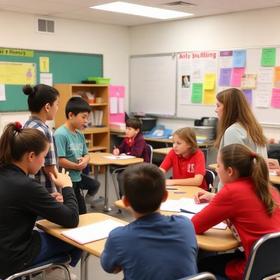
What type of learner is your child? Be in the know about different types of learning and which classrooms are best suited for each type. What is project-based learning? Cooperative Learning? Would your child benefit from a blended learning experience? Explore these teaching techniques and learn how they could improve your child’s performance.
KINDERGARTEN AND ELEMENTARY ISSUES
Weigh the pros and cons of preschool, full day kindergarten and other issues affecting our youngest learners. Learn what can be done to help your child prepare to enter school, boost confidence, and encourage reading at the grade school level.
HIGH SCHOOL ISSUES
Learn more about issues specific to high school students. Get an overview of high school graduation rates, college readiness, career choice and social issues impacting teenagers in public schools.