Public School Policies

From unions to vouchers, school budgets to discipline policies, we cover some of the most controversial issues affecting public schools today. Learn more about education reform and how it impacts your family. Keep current on the latest controversies regarding religion, sex-education, civil rights and more.

View the most popular articles in Public School Policies:

How Positive Behavior Programs are Improving Public School Campuses

Updated
|
How Positive Behavior Programs are Improving Public School Campuses
Learn about how new positive behavior programs are creating healthier, more positive public school campuses, as well as encouraging students to perform better academically.

Public schools are no longer focusing on just reading, writing, and arithmetic. Hoping to improve the social environment on campus, many school leaders are experimenting with innovative positive behavior programs.

Every day, more than 25 million middle and high school students walk through the hallways and classrooms of public schools across the country. According to Iris Educational Media (IEM), break times, lunch times, and moments between classes create the campus climate – and the students’ behavior ultimately impacts whether the environment is safe and respectful or intimidating and negative.

Public school behavior programs encourage students to build healthy relationships, develop positive behavior, and foster a shared responsibility amongst the community. All of these factors contribute to a more productive campus environment, as well as better academic achievement for individual students.

This video explains positive support.

Demanding a Change: Why Schools Need Positive Behavior Strategies

As IEM further reveals, problems with negative student behavior occur at all grade levels and can cause serious negative impacts on each student’s development and confidence. In fact, in specifically examining the pre-teen and high school years, the National Center for Education Statistics has reported that nearly 5 percent of all 12 to 18-year-olds have avoided school-related functions due to feelings of fear and/or apprehension.

While negative behaviors undoubtedly impact a

. . .read more

The Latest Public School Initiatives Against Gang Activity

Updated
|
The Latest Public School Initiatives Against Gang Activity
Gang activity continues to be prevalent throughout public schools, ranging from urban cities to suburban enclaves. Learn about how public schools are combating gang violence today with comprehensive initiatives.

Although the media may not frequently report sensational stories of public school gang activity, the reality of the statistics is not reassuring. Experts have found that a rising number of schools have been encountering gang-related activity – in areas outside of the stereotypical urban cities. According to the National Center for Education Statistics, during the 2003 – 2004 school year alone, 41% of high schools and 31% of middle schools reported gang activity.

As Phi Delta Kappa, an association of professional educators, explains, “Once the exclusive of poor neighborhoods in our large cities, youth street gangs have lately inspired an almost paralyzing fear in both suburban and rural middle-class communities across the nation.”

To address the growing gang dangers prevalent in school communities, educational leaders have been enforcing new practices to keep campuses and students safer.

Gangs in Public Schools: The Rising Concern

While gangs can realistically arise in any region, many schools throughout the country have reported significantly higher rates of gang activity. For example, as the Seattle Times reveals, one local Washington state high school, Garfield, has been forced to make significant changes in order to combat pressing gang problems in recent semesters. According to reports, “As Seattle struggles with heightened violence attributed to street gangs, the city's schools are increasingly shaping policies to keep the problem from spreading onto campuses.”

Garfield High School has implemented comprehensive changes in an effort to reduce gang activity, including:

  • The school purposefully avoided scheduling any
. . .read more

Public School Budget Cuts Translate into Higher Costs for Families

Updated
|
Public School Budget Cuts Translate into Higher Costs for Families
Public school budget cuts are now impacting parents' pocketbooks. Learn about how public schools are now requiring parents to pay for certain school supplies, ranging from printed worksheets to even textbooks.

Budget cuts have forced public schools to reduce their curriculum offerings, increase class sizes, and cut back on teacher positions. However, to fill the fiscal gap, many schools are taking even more drastic measures to reduce their operating costs.

The costs of new textbooks, classroom materials, and even handouts can result in massive school expenses. Subsequently, many public schools are now requiring students to purchase their own materials and books! As a result, many families may be forced to increase their education spending to meet their child’s classroom needs.

This video offers an overview of public K-12 education in the United States.

Cutting Jobs, Classes...and Textbooks?

When schools are faced with budget costs, most districts begin by eliminating faculty positions; however, reducing the number of teachers and administrators can only go so far on the bottom line. If school leaders reduce their faculty numbers, but still have not met their budgetary restrictions, then leaders are forced to develop new, and often controversial, alternatives.

For example, according to ABC News, schools across the state of California are hoping to reduce their spending by using older textbooks for longer periods of time. While California schools have already eliminated various educational programs, along with teaching and faculty positions, these cuts are simply not enough – and new textbooks are literally getting the ax.

In fact, school leaders report that the state of California will not be

. . .read more

Bill Gates: The Savior of Public Schools?

Updated
|
Bill Gates: The Savior of Public Schools?
Through the Gates Foundation, Bill Gates has not only donated billions of dollars to public schools, but will now sponsor in-depth research on improving teaching that may change the face of public school education forever.

In addition to monetary donations, Bill Gates has consistently articulated his belief that improving the quality of teachers is one of the most effective ways to enhance student learning.

As The Bellingham Herald noted, researchers have long struggled to define and measure what makes a teacher truly effective. While most parents recognize the impact of a strong teacher, translating that impact into measurable data has proven difficult.

To address this challenge, the Bill and Melinda Gates Foundation committed billions of dollars to research aimed at identifying the key traits of successful educators. One major initiative, the Measures of Effective Teaching (MET) project, explored multiple evaluation methods, including classroom observations, student feedback, and academic growth metrics. A research overview of teacher effectiveness can be found at https://www.rand.org/education-employment-infrastructure/projects/measuring-teacher-effectiveness.html.

Ideas proposed and tested through these initiatives included:

  • Recording and analyzing classroom instruction through video
  • Using student surveys to evaluate teaching effectiveness
  • Incorporating multiple measures beyond standardized test scores
  • Providing targeted professional development based on feedback

These strategies have influenced how many districts approach teacher evaluation today, even as policies have evolved.

In 2026, the conversation has shifted slightly. While accountability remains important, there is increased emphasis on supporting teachers rather than strictly evaluating them. Districts are investing more in coaching, mentorship programs, and ongoing professional learning, recognizing that teacher retention is now as critical as teacher performance. For national data and trends, visit https://nces.ed.gov.

Evolving Strategies in a Changing Education Landscape

Education reform efforts backed by the

. . .read more

Are Your Local Public School Instructors Still Qualified to Teach?

Updated
|
Are Your Local Public School Instructors Still Qualified to Teach?
Federal legislation has outlined stricter qualification guidelines for public school teachers. Learn about the minimums and whether your local public school teachers are still qualified to instruct classrooms.

The No Child Left Behind (NCLB) act mandated that all public schools evaluate their teachers based upon stricter qualifications. However, not all schools have revamped their employee rosters and hiring checklists, leading parents to wonder, "are my child's teachers still qualified?"

According to the US Department of Education in 2005, all public school teachers must be considered "Highly Qualified" in order to teach. To be labeled as a "highly qualified teacher," instructors must hold a bachelor's degree, full state certification, and proof of subject-area competency.

While the standards of a "highly qualified teacher" are generally reasonable, many schools in the United States expressed challenges in achieving these goals. Specifically, schools in rural areas found it nearly impossible to hire new, "more qualified" teachers than the limited number currently employed. As a result, the mandates of NCLB were revised to allow for more flexibility.

To find out if your local public school teachers meet all of the NCLB qualifications, consider the following standards outlined by the legislation.

NCLB "Highly Qualified" Requirements

The requirements for achieving the "highly qualified" teaching status depends upon one's subject area and additional state-based guidelines. Generally, all elementary teachers are required to meet the following criteria:

  • More than 180 days of teaching experience
  • Pass state-mandated subject tests
  • Certified for all elementary education (as opposed to specific subject areas)

Middle school and high school teachers are required to meet the following criteria:

. . .read more

Recent Articles

AI Report Cards: Should Schools Evaluate AI Use?
Explore whether schools should assess student AI use, the benefits, risks, and what responsible AI report cards could look like in 2026.
The Parent’s Guide to School Cell Phone Bans in 2026
Learn how school cell phone bans work in 2026, why districts are adopting them, and what parents should expect.
Parental Involvement in Public Schools: 2026 Update
Explore the latest 2026 trends, research, and strategies shaping parental involvement in public schools and student success.

Public School Policies

EDUCATION REFORM
Education reform is in the works, and you can stay updated on the latest changes, debates, and policies here. Learn more about No Child Left Behind and how it impacts your child. Explore how federal and state government is working to improve school performance, student achievement and education standards.
TEACHERS AND UNIONS
A comprehensive look at teachers, tenure, and unions. Learn how unions impact school performance. Explore the impact of education reform on teaching qualification standards, traditional unions and controversial tenure rules.
PUBLIC SCHOOL BUDGETS
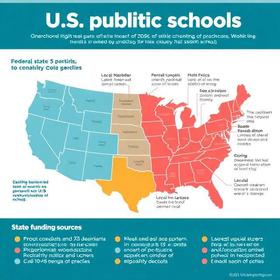
We offer an overview of public school budgets; where the money comes from, how it’s spent and what schools are doing to get more funding. Learn how schools are cutting budgets and how the cuts will impact your child. Delve into some of the creative ways school districts are trying to raise money and where the extra money is spent.
VOUCHERS
Explore both sides of the school voucher debate. Learn what your options are, how those choices are funded and the impact on your local school district. From the latest government initiatives to results from recent studies, explore vouchers and the options they provide.
SCHOOL DISCIPLINE POLICIES
Examine the various discipline methods being put to use in public schools. From detention to expulsion, spanking to handcuffing, school discipline can often be controversial. Does spanking work? Do police belong in schools? Learn more about what is being done to punish out of control students.
SCHOOL CONTROVERSIES
The most controversial issues impacting public school students today. From bullying to book bans, this is a comprehensive look at some of the most oft-debated issues. This section features articles on school segregation, religion, over-crowding, civil rights, and green technology.