
Public School Policies

From unions to vouchers, school budgets to discipline policies, we cover some of the most controversial issues affecting public schools today. Learn more about education reform and how it impacts your family. Keep current on the latest controversies regarding religion, sex-education, civil rights and more.

View the most popular articles in Public School Policies:

Do Public Schools Perform Better without a Principal?

Updated
|
Do Public Schools Perform Better without a Principal?
Explore how teacher-led public schools are evolving in 2026, with updated facts on teacher autonomy, school governance, educator retention, and student-centered learning models.

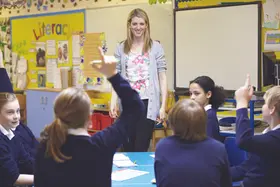
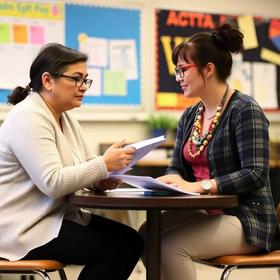
A new model in public education continues to gain attention across the country: teacher-led schools that put teachers in the driver's seat of both the classroom and many of the school's daily operations. Often referred to today as teacher-powered schools, these campuses give educators a much greater role in instructional leadership and school governance than traditional public schools. Teacher-led schools have operated in cities across the country, including Los Angeles, Denver, Boston, Milwaukee, and Detroit, while additional teacher-powered schools have been established in states such as Minnesota and Wisconsin.

The movement has continued to grow as school districts search for innovative ways to improve teacher retention, increase collaboration, and better meet students' needs. Rather than relying solely on traditional administrative structures, many teacher-led schools distribute leadership among teachers, allowing those who work most closely with students to participate directly in important school decisions.

Bye-Bye Bureaucracy

The concept of teacher-led schools started with the idea that teachers are often better equipped to meet the needs of students because they work with children and curriculum every day. In traditional schools, teachers typically need approval from principals or district administrators before implementing significant instructional changes or introducing new programs. Teacher-led schools attempt to reduce these layers of bureaucracy by giving educators greater authority over curriculum, scheduling, professional development, and other instructional decisions.

In 2026, however, most teacher-powered schools do not eliminate administrators entirely. Instead, they use a shared leadership model. School leaders often continue to oversee budgeting, compliance, facilities, enrollment, and

. . .read more

Education Investment Unveiled: Which State Leads the Nation in Public School Funding?

Updated
|
Education Investment Unveiled: Which State Leads the Nation in Public School Funding?
Discover which state allocates the highest funding per student in public schools. Dive into US Census Data to unveil the most financially supportive state and explore if increased spending translates to enhanced student learning outcomes.

Despite the budget cuts that have hit school districts nationwide over the past two years, recent numbers released for 2008 show that education was surprisingly healthy in the financial realm before the economic slowdown.

A recent analysis of U.S. Census Data by Bloomberg showed that public school systems spent more on education per student during this year than in the previous 16 years of education spending. An article in Bloomberg Businessweek recently reported that the average spending per student across the country was $ 10,259, with some districts spending more and others spending much less.

What the Numbers Show

The Bloomberg report was calculated for the 2007-2008 school year, and it included all 50 states. To get an accurate picture of education spending over the last two decades, numbers were adjusted for inflation. The results showed that this particular academic year boasted the biggest spending increase since at least 1992, the earliest year this type of data was available.

In a Georgia Education News blog report, Lisa Blumerman, chief of the Governments Division at the U.S. Census Bureau, said, "This report on public school spending shows us how taxpayer money is being spent on education. Public education is the single largest category of all state and local government expenditures. These data provide a detailed picture of how available resources are spent within the public education system."

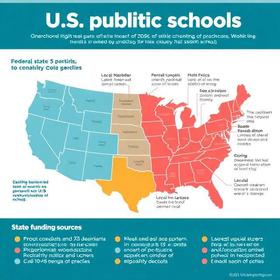
School funding comes from various local, state, and federal sources. In 2008, public school systems received $582.1 billion in

. . .read more

Should Public Schools Hold Graduations at Churches?

Updated
|
Should Public Schools Hold Graduations at Churches?
Public school graduations are being criticized for violating the separation of church and education mandate. Learn about the controversy facing cap and gowns in church.

When it comes times for public school graduates to march up the aisle to the tune of "Pomp and Circumstance," the venue for the ceremony becomes an issue. Many high schools do not boast a large enough gymnasium or auditorium to house a significant number of graduates and family members, and outdoor stadiums are always vulnerable to stormy weather. Public venues, like professional arenas, can be quite costly to rent, leading some schools to look for affordable alternatives within the community.

In some cities, the apparent solution has been to hold graduation ceremonies in large church buildings, and pastors have been more than happy to offer their spaces to neighboring schools. However, public school graduations in churches have raised questions across the country about the separation of church and state. In fact, some schools have actually found themselves in the midst of court proceedings as a result of inadvertently combining religion with public education.

This video looks at the issue of separation of church and state in our public schools.

A Fight at First Cathedral

First Cathedral, a non-denominational megachurch in Connecticut had opened its doors to no less than five high school graduations in previous years, according to an article in USA Today. The expansive church was chosen by the schools both for comfort and affordability.

However, not all the students and parents were comfortable holding a graduation ceremony in

. . .read more

Growing Trend: Public Schools are Soliciting Churches and Businesses for Money

Updated
|
Growing Trend: Public Schools are Soliciting Churches and Businesses for Money
Public schools are becoming creative in fundraising in the midst of major budget crises. Learn about how they are selling ad space to companies and sponsorships to churches in exchange for school supplies and money.

With schools across the country facing severe budget cuts due to the current economic slowdown, some are getting creative in their money-raising efforts. As home values plummet and residents are forced to relocate, many school districts are forced to cut their budgets by as much as 10% or more. This means that many schools must choose between cutting funding for much needed supplies and programs and reducing staff.

However, by finding new ways to raise money, from partnering with local churches to selling advertising on school buses, districts are finding ways to get the money they need to provide supplies and staffing to their students.

The Church Connection

Churches have a mission to help people in need. Schools have become quite needy, with severe budget cuts that prohibit them from providing even the basics to their students. It appears that at least one public school in Florida has recognized the connection between the two.

Combee Elementary School in Lakeland, Florida, has been "adopted" by the First Baptist Church at the Mall, according to a recent report on the Wall Street Journal. The local church has stocked a resource room with $5,000 worth of supplies for the school and continues to meet with the school principal to identify additional needs and try to meet them.

In exchange for its financial assistance, the church gains access to families in the community, according to church pastors. Pastor Dave McClamma told the WSJ, "We have inroads

. . .read more

Teaching Church in Public School? Texas Votes Yes

Updated
|
Teaching Church in Public School? Texas Votes Yes
Learn about changes in Texas' public school curriculum that reinterprets American history and potentially incorporates more Christianity into coursework.

Public school curriculum is becoming a national hot topic of debate. From ethnic studies in Arizona to American history in Texas, major changes are being made to public school curricula.

The State Board of Education in Texas recently approved a new social studies curriculum that will be introduced during the next school year. Educators will spend the year getting trained on how to teach the new curriculum, which will be used in classrooms beginning with the 2011-2012 school year. The discussion over the seemingly religion-based revisions began in January and has been the source of intense international attention and comment, according to an update on the Texas Education Agency website.

What the Curriculum Includes

The revised curriculum, dubbed the Texas Essential Knowledge and Skills, will paint American history in a rather different light, with a definitive Christian, conservative slant. While the New York Times cited more than 100 amendments that have been passed on the curriculum since discussions began in January, the Washington Post and the Texas Education Agency list some of the major themes of the curriculum, which will include:

  • Comparing the inaugural addresses of Abraham Lincoln and Jefferson Davis
  • Examining why the Founding Fathers protected religious freedom and relating their intentions to the phrase "separation of church and state."
  • Downplaying Thomas Jefferson's role in the creation of our country (Jefferson was just one of the founding fathers who was not a professing Christian)
  • Giving more attention to President Reagan and his role in
. . .read more

Recent Articles

Media Literacy as a Core Skill: How to Tell if a School Teaches It Well
Learn how to evaluate whether a public school teaches media literacy effectively, from fact-checking and source evaluation to digital citizenship and critical thinking.
Screen Time, Paper Learning, and the New Back-to-Basics Debate
Explore why some public schools are reducing screen time, bringing back paper learning, and rethinking the balance between technology and traditional instruction.
Student Data, AI Tools, and Privacy: Questions to Ask Your District
Learn how public schools use AI, protect student data, and the key privacy questions every parent should ask their school district in 2026.

Public School Policies

EDUCATION REFORM
Education reform is in the works, and you can stay updated on the latest changes, debates, and policies here. Learn more about No Child Left Behind and how it impacts your child. Explore how federal and state government is working to improve school performance, student achievement and education standards.
TEACHERS AND UNIONS
A comprehensive look at teachers, tenure, and unions. Learn how unions impact school performance. Explore the impact of education reform on teaching qualification standards, traditional unions and controversial tenure rules.
PUBLIC SCHOOL BUDGETS
We offer an overview of public school budgets; where the money comes from, how it’s spent and what schools are doing to get more funding. Learn how schools are cutting budgets and how the cuts will impact your child. Delve into some of the creative ways school districts are trying to raise money and where the extra money is spent.
VOUCHERS
Explore both sides of the school voucher debate. Learn what your options are, how those choices are funded and the impact on your local school district. From the latest government initiatives to results from recent studies, explore vouchers and the options they provide.
SCHOOL DISCIPLINE POLICIES
Examine the various discipline methods being put to use in public schools. From detention to expulsion, spanking to handcuffing, school discipline can often be controversial. Does spanking work? Do police belong in schools? Learn more about what is being done to punish out of control students.
SCHOOL CONTROVERSIES
The most controversial issues impacting public school students today. From bullying to book bans, this is a comprehensive look at some of the most oft-debated issues. This section features articles on school segregation, religion, over-crowding, civil rights, and green technology.