
About Public Schools

Here we cover the history of public schools, explain the various types and discuss their pros/cons. Learn more about technology on campus, health and nutrition issues, and the latest information related to a variety of student populations.

View the most popular articles in About Public Schools:

Saying Ni Hao to Chinese Charter Schools

Updated
|
Saying Ni Hao to Chinese Charter Schools
The number of Chinese immersion charter schools in this country is growing, fueled by the desire for parents and children to learn the most prevalent language spoken in the world today. Learn about the benefits of Chinese charter schools and which states are home to some of the pioneering campuses.

Many education and business experts agree that Chinese is the language du jour if the United States hopes to compete in a global marketplace that is significantly dominated by the PRC. However, the number of students learning this language in school isn't adding up to what some perceive as the demand for more Mandarin-speaking Americans. To help create a more diverse climate, Chinese immersion charter schools are opening across the country, with hopes to teach children one of the most difficult languages at a very young age. We'll take a look at some of these charter schools, including those already in operation and those hoping to launch in the not-so-distant future. Here is an overview of this type of school.

Why Chinese?

It is no secret that China has one of the most robust economies across the globe today. To compete with this country, most agree that we need to better understand them. According to an op-ed piece in Newsweek, training a culturally-savvy workforce is something that other countries understand much better than the United States does. For example, Chinese is the second-most-popular language in Japan and South Korea. In the United States, Chinese is down in the fifth spot for foreign language instruction.

Multi-lingual students are not restricted to Asia, either. In Europe, most children learn a second, third or fourth language while they are still in elementary school. Students in the


. . .read more

Local Schools and Charter Schools: Can They be Close Allies?

Updated
|
Local Schools and Charter Schools: Can They be Close Allies?
While local schools and charter schools have been portrayed as competitors, new initiatives are encouraging both schools to work together to improve the academic lot of all students.

Local schools and charter schools have historically clashed in many school districts. Local schools have complained that charters take away district funds and promote competition that has no place in the public school system. On the other hand, charter schools counter the fact that they typically receive less funding than other local schools, even though they are also considered public schools.

The District-Charter Collaboration Compact

The Bill and Melinda Gates Foundation is addressing this conflict directly at its source by providing financial incentives for charter and local schools to work together for the benefit of the students they serve. The District-Charter Collaboration Compact was designed by the foundation to encourage these two groups to find new and creative ways to work together to raise the bar on the standard of education in their communities. Schools that prove they can work well together will be rewarded with grants from the foundation that will go to providing access to consultants and advisors that will help them improve the quality of education across the board.

Vicki L. Phillips, director of education, College Ready, at the Bill and Melinda Gates Foundation, said in a press release on the foundation's website, "Traditional public schools and public charter schools share a common goal of preparing all students for future success. Too often, issues not tied to academic outcomes can make it difficult for schools and teachers to have the opportunity to learn from each other and build upon successful practices,

. . .read more

Hebrew-Immersion Public Charter Schools: Ken or Lo?

Updated
|
Hebrew-Immersion Public Charter Schools: Ken or Lo?
Hebrew-immersion charter schools are slowly opening their doors in several states, but they have their fair share of both proponents and opponents. Learn about the debate and constitutionality of Hebrew-immersion public charter schools.

While many school districts nationwide are tightening their belts with smaller budgets, others are considering a broader range of charter schools to address the specific needs of families in their areas. One type of charter school that has gained plenty of attention in recent years is Hebrew immersion charter schools, which teach the Hebrew language and culture without bringing religion into the picture. While many school districts have denied such charter applications, others have signed on for Hebrew immersion schools, which are filling quickly in some areas.

Try, Try Again!

In Bergen County, New Jersey, one Hebrew-immersion charter school is hoping the fourth time is the charm as it once again submits its charter application to the state for approval. The school, Shalom Academy, may get its wish in a year when the current state government hopes to expand public school choices. According to a report at NJ.com, this year might be Shalom's best shot at approval.

The Shalom Academy would serve populations in Englewood and Teaneck, which already host a charter school. It is estimated that the two current schools would have to reduce their budgets by nearly $3 million to create the money needed to set up and run Shalom Academy.

This video documents how, with their use of taxpayer dollars for Hebrew education, the nation's Hebrew-language charter schools are becoming an increasingly popular choice for Jewish parents.

There

. . .read more

When Public Schools Fail Special Education Students: What Parents Can Do

Updated
|
When Public Schools Fail Special Education Students: What Parents Can Do
Parents of special education students who are frustrated with the lack of support in the public school system are taking matters into their own hands. Learn about the lawsuits parents are filing against public schools that are failing special ed students.

While most children can work well within the public school system, kids with special needs require additional help to succeed academically. Unfortunately, not all school districts are equipped to handle students with a wide range of needs properly, and these kids often fall through the cracks without getting the specialized help they desperately need. Fortunately, parents of these kids have legal options when the school system fails.

Failure to Identify Needs

In Wisconsin, a class-action suit is underway to examine how Milwaukee Public Schools answers the call to students with special needs, according to a report in the Milwaukee Wisconsin Journal Sentinel. The lead plaintiff in this suit, Jamie Stokes, is a 16-year-old who reads at a second-grade level and writes at a third-grade level. The young girl has struggled in school since the age of five, but the district would not agree to test her until Stokes failed first grade for the third time. At that point, the district determined that Stokes suffered from developmental delays and required additional support.

Stokes's mother, Kina King, believes that if Stokes had received intervention services earlier, she might be on a more solid academic footing today. King told the Journal Sentinel, "If they gave her the help, she would have been better, not coloring books her sister in kindergarten is doing." Now, the MPS is facing the question of compensation for families with students who were not placed in special education in a timely manner.

The

. . .read more

Healthy School Meals: Salad Bars

Updated
|
Healthy School Meals: Salad Bars
Learn how school salad bars have evolved and why fresh fruits and vegetables remain a key part of public school nutrition programs in 2026.

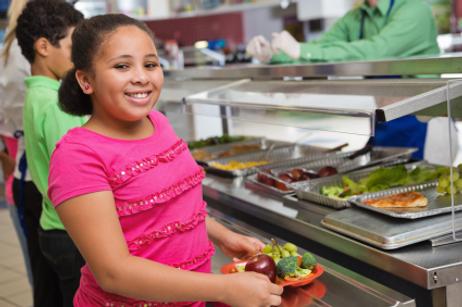
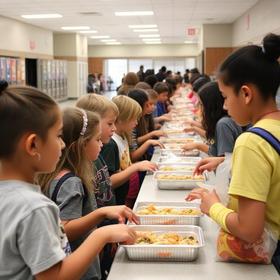
Forget the days of "pigs-in-a-blanket" and pizza for lunch. Today's public schools continue to embrace healthier meal options, with fresh fruits and vegetables playing a larger role in school cafeterias than ever before. School salad bars, once considered an innovative idea, have become a familiar feature in many districts across the country.

One of the earliest national efforts to bring fresh produce into school cafeterias was the "Let's Move Salad Bars to Schools" initiative. The program was launched at Riverside Elementary School in Miami, Florida, making the school one of the first elementary schools in the nation to offer students regular access to a dedicated salad bar filled with fresh fruits and vegetables.

More than a decade later, the goals behind that initiative remain highly relevant. As schools continue to focus on student wellness, nutrition education, and healthier eating habits, salad bars remain an important tool for helping children make nutritious food choices.

The Choice of Riverside

Riverside Elementary was chosen as an early participant in the initiative because students had already begun growing their own garden, filled with tomatoes, eggplant, kale, and other produce. School leaders hoped the garden would eventually provide fresh ingredients that could be incorporated into lunches and snacks served through the salad bar.
The garden was grown in cement boxes because the school did not have additional land available for larger-scale planting. Even so, the project demonstrated how schools can incorporate hands-on nutrition education into everyday learning.

Many of the Riverside students were

. . .read more

Recent Articles

Media Literacy as a Core Skill: How to Tell if a School Teaches It Well
Learn how to evaluate whether a public school teaches media literacy effectively, from fact-checking and source evaluation to digital citizenship and critical thinking.
Screen Time, Paper Learning, and the New Back-to-Basics Debate
Explore why some public schools are reducing screen time, bringing back paper learning, and rethinking the balance between technology and traditional instruction.
Student Data, AI Tools, and Privacy: Questions to Ask Your District
Learn how public schools use AI, protect student data, and the key privacy questions every parent should ask their school district in 2026.

About Public Schools

OVERVIEW OF PUBLIC SCHOOLS
A comprehensive look at the U.S. public school system, including history, governing bodies, funding, and services. Compare private, public and charter schools. Learn more about Magnet school programs and get tips on choosing the right school for your child.
TYPES OF PUBLIC SCHOOLS
Explore the different types of public schools, from charter to language immersion, and learn about the unique pros and cons of each type. Is a co-ed or single sex classroom best for your child? Charter school or magnet? Read expert advice and get valuable tips on the various public education programs available and how to choose what works best for your family.

TECHNOLOGY ON CAMPUS
From eBooks to web cams, technology on campus continues to grow. Learn how the latest technology impacts your child’s education. Get tips on the best ways to integrate technology into education and stay abreast of the latest developments and challenges facing schools.



HEALTH AND NUTRITION AT SCHOOL
From vending machines to Jamie Oliver, bed bugs to tuberculosis, we provide an in-depth look at health and wellness in public schools. Help your kids stay healthy on campus and learn about current health epidemics, vaccination requirements, physical fitness programs and the latest food initiatives.

BACK TO SCHOOL
Learn more about preparing your child and wallet for a new school year. Inside you’ll find valuable advice to help your family prepare for the transition from swimsuits to school. While there is no tuition, public school education does not come without costs. Learn more about budgeting for a new school year and get great money saving tips.
STUDENT POPULATIONS
The latest trends, laws and resources for a variety of student populations. Every child has different needs, and this section offers helpful information for LGBT, special education, gifted, low-income, and minority students.