School Controversies

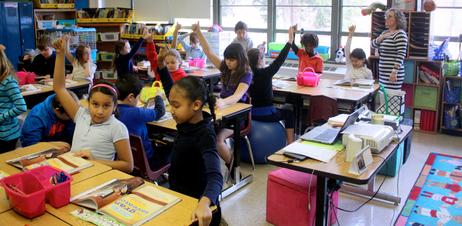
The most controversial issues impacting public school students today. From bullying to book bans, this is a comprehensive look at some of the most oft-debated issues. This section features articles on school segregation, religion, over-crowding, civil rights, and green technology.

View the most popular articles in School Controversies:

Are Public Schools Still Fighting for Desegregation?

Updated
|
Are Public Schools Still Fighting for Desegregation?
Learn about how public schools today are fighting against a modern form of segregation: racial isolation.

While the unjust days of official segregation ended 40 years ago, public schools today are struggling against another type of segregation: racial isolation. Public schools in both urban and rural areas have been experiencing racial isolation, which occurs when one district is densely populated by a predominant ethnic group.

To combat these geographically-induced segregation trends, public school leaders have created integration programs to develop more diverse student populations. While the concept of mandatory racial integration may sound strange to an unfamiliar ear, schools across the country have implemented “reassignment” programs to increase diversity. In many cases, public schools have enforced specific race-based quotas – and these practices have ignited controversy on both sides of the debate.

From the Library of Congress: "The massive effort to desegregate public schools across the United States was a major goal of the Civil Rights Movement. Since the 1930s, lawyers from the National Association for the Advancement of Colored People (NAACP) had strategized to bring local lawsuits to court, arguing that separate was not equal and that every child, regardless of race, deserved a first-class education. These lawsuits were combined into the landmark Brown v. Board of Education Supreme Court case that outlawed segregation in schools in 1954. But the vast majority of segregated schools were not integrated until many years later. Many interviewees of the Civil Rights History Project recount a long, painful struggle that scarred many students, teachers, and parents."

Chicago Public Schools: Mandatory Racial Integration

Gaining a major
. . .read more

Is Your Local Public School Telling the Truth?

Updated
|
Is Your Local Public School Telling the Truth?
Across the country, public schools are being caught red-handed in manipulating their test scores, graduation rates, and campus safety data. Learn about why schools are cheating and how they are distorting the truth.

While schools should instill moral fortitude into their students, some educational institutions are "cheating" their systems. According to recent investigations, several public schools have been caught tampering with their schools' test score reports, graduation rates, and other performance-related statistics.

What Could Information be Falsified?

Under the No Child Left Behind Act, public school leaders are under incredible pressure to ensure their scores stay high while their graduation rates continue to soar. Public schools must publish data on campus violence, academic performance, and graduation rates. Adding to these focus areas, schools must publicly publish an annual "report card" of the school, allowing community members to ascertain how specific groups have performed throughout the year. The specific groups assessed in this report card are differentiated by:

  • Ethnicity
  • Disability
  • Income (plus other potential related socio-economic factors)
  • English language proficiency

In addition, all public schools must disclose their annual dropout rates, teacher qualification standards, and records, as well as other locally-mandated data.

This video is an example of test score manipulation in our schools.

The Pressure to Tamper With Public School Reports

While increased access to school records undoubtedly benefits the community, the transparency mandated by NCLB prompts some school leaders to falsify educational data.

Reason Magazine reveals, "While federal and state legislators congratulate themselves for their newfound focus on school accountability, scant attention is paid to the quality of the data they're using. Whether the topic is violence,

. . .read more

Are City Mayors Taking Control Over Public Schools?

Updated
|
Are City Mayors Taking Control Over Public Schools?
Across the nation, city mayors have increased their role and control over the local public school system. Learn about the controversies and the ramifications of mayoral control.

How well do politics and education mix? From New York to California, residents across the country are concerned that their public schools are being taken over by local mayors. Most controversially, New York City's Mayor Michael R. Bloomberg has been confronted by loud opponents, with protesters arguing that Bloomberg is overstepping his boundaries in making major changes in the city's local schools. However, Bloomberg is not the only mayor under the spotlight.

This video looks at the issue of control in our schools.

The Recent Battle: Do Mayors Have Too Much Control?

As the New York Times reveals, there has been an "increasingly acrimonious battle over mayoral control of New York City's public schools." According to reports, Bloomberg took control from the "fractious Board of Eduction" in 2002 to make needed changes to help improve the public schools' test scores and graduation rates. While Bloomberg's intentions seem to have been noble, opponents argue that one mayor alone cannot have such authority and control over 1,500 schools and 1.1 million students. Although the mayoral oversight plan officially expired on June 30th, Bloomberg still retains the ultimate control over the schools.

As a result, 10 democratic senators held a news conference in July, demanding that Bloomberg make concessions before attempting to enforce any additional educational reforms. The conference became increasingly tense as some of the senators labeled Bloomberg as a "dictator," stating

. . .read more

Can Your Child’s School Test Students for Drugs?

Updated
|
Can Your Child’s School Test Students for Drugs?
Learn about the controversy surrounding public schools testing students for drug and substance use.

Faced with the rising concern regarding teen drug and substance abuse, the Supreme Court granted public schools the legal permission to administer random drug tests for student-athletes in 2002. Since this decision, public schools have contemplated expanding the drug testing scope into their entire student population.

According to USA Today, in the 2005 to 2006 academic year alone, 373 public schools received federal funds for drug testing, which was quite a surge in response compared to the mere 79 public schools just two years prior.

With the rising implementation of drug tests for student-athletes, advocates for drug testing assert that schools should now expand their screening. As the legal barriers that oppose public school drug tests have been overturned, more schools are contemplating the opportunity to expand their drug testing parameters. This shift in policy has some parents, students, and academic leaders concerned about student rights. Can public schools randomly screen their students for drugs without invading a student’s privacy rights?

Drug Testing in Public Schools

While the number of schools randomly testing student-athletes for drug use is rising, the total number of participating public schools only amounts to a rather tiny percentage, with just 28,000 public schools screening students for drugs. Many public schools, as USA Today further reveals, have been reluctant to pursue drug testing policies and actions out of a fear of violating state-mandated rights and laws.

In contrast, advocates for drug testing assert that students can be tested without being unreasonably

. . .read more

Class Size: State Regulation of Class Size

Updated
|
Class Size: State Regulation of Class Size
Learn how various states regulate maximum class sizes.

The debate on whether smaller class size corresponds with higher academic achievement is an ongoing controversy. Numerous studies have been conducted with conflicting results. Federal funding for class size reduction has been inconsistent. A 1999 federal program designed specifically to fund class size reduction was repealed by the No Child Left Behind Act of 2001. The inconclusive results from the studies of class size reduction leave education policymakers to decide whether reducing class sizes should be a state priority in school reform. This article discusses some of the approaches states have used to regulate class size, whether current budget shortages or other changing conditions may have an unintended impact on class size initiatives, and what parents can do with respect to their child's class sizes.

This insightful article delves into states' various approaches to regulating class size, examining their effectiveness and potential unintended consequences amidst current budget shortages and changing educational landscapes. We explore how factors such as funding limitations, shifting priorities, and evolving instructional models may impact class size initiatives. Additionally, we provide valuable guidance for parents on understanding and advocating for their child's class sizes. By empowering parents with knowledge and practical steps, we aim to equip them to engage with schools, educators, and policymakers to ensure optimal learning environments for their children. Discover the complexities of class size regulations, their potential implications, and how parents can actively contribute to the conversation surrounding this critical aspect of education.

State Laws Limiting Class Size

Notwithstanding the ongoing

. . .read more

Recent Articles

Media Literacy as a Core Skill: How to Tell if a School Teaches It Well
Learn how to evaluate whether a public school teaches media literacy effectively, from fact-checking and source evaluation to digital citizenship and critical thinking.
Screen Time, Paper Learning, and the New Back-to-Basics Debate
Explore why some public schools are reducing screen time, bringing back paper learning, and rethinking the balance between technology and traditional instruction.
Student Data, AI Tools, and Privacy: Questions to Ask Your District
Learn how public schools use AI, protect student data, and the key privacy questions every parent should ask their school district in 2026.