
Updated
|
10 Tips for Choosing the Best School for Your Child
Make sure you consider these 10 factors when choosing the school best poised to provide the most effective education for a child’s specific needs.

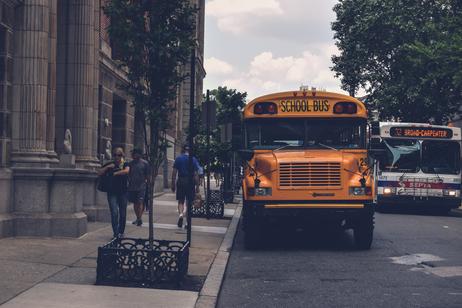
The right school for your child can make all the difference in his or her successful academic career. The good news is that there are many options in education beyond the public school down the street today. The bad news is that the abundance of options often leaves parents in a quandary over how to choose the best environment for their children. It is important to know what to look for in a school to ensure your child receives the best possible education for his specific needs. In some cases, that might indeed be the public school down the street, while other children may need a different environment to facilitate their learning process most effectively.

What are the Choices?

Many parents are unaware of the different choices they have in educating their children today. According to Education.com, some of the options available in K-12 education include:

Neighborhood Public Schools

It is important to learn about the various types of schools available nearby, so you can make an informed choice for your children.

Factors to Consider when Selecting a School

Once you know which options are available to you, it is time to determine the best environment for your child, based on the 10 steps we have outlined here:

Finding a Good Fit

To find the best learning environment, a parent needs to set the following four criteria outlined at GreatSchools.org:

  • What you
. . .read more

Detroit Public Schools Lay Off Thousands of Teachers

Updated
|
Detroit Public Schools Lay Off Thousands of Teachers
Recent news out of Detroit finds that thousands of teachers and school staff have been notified they will have to reapply for their jobs for the next school year. What does this mean for students and the district?

Recent news out of Detroit finds that thousands of teachers and school staff have been notified they will have to reapply for their jobs for the next school year. What does this mean for students and the district?

In response to numerous changes made to the Detroit Public School system at the time, thousands of teachers in the district received “pink slips” telling them they could reapply for their jobs over the summer. With more than 4,000 teachers affected ahead of the upcoming school year, many predicted that chaos would reign when students returned to classrooms in the fall.

At the same time, district officials attempted to reassure students and parents that the decision to lay off teachers was the best way to ensure they had sufficient teachers, and the right teachers, heading up classrooms at the beginning of the school year.

Changes to the District Prompt Layoffs

One reason for the mass layoff was the many changes the Detroit school system faced during that period. A new system, the Educational Achievement Authority, was put in place to deal with schools that were consistently unable to perform at state standards. Under this system, 15 Detroit schools were slated to switch districts for the following school year, removing those schools from the Detroit Public School system. All of those schools were classified as low-performing, according to state standards.

This change involved approximately 12,000 students leaving DPS for the Educational Achievement Authority system. According to eSchool News,

. . .read more

Are Teacher Unions a Help or Hindrance to Public Education?

Updated
|
Are Teacher Unions a Help or Hindrance to Public Education?
In light of all the finger-pointing occurring in the education reform movement, we’ll look at the good and bad of teachers unions – and whether these organizations really work in favor of students and/or teachers.

Teacher unions have been a part of American education for well over a century, beginning with grassroots efforts to support teachers through improved salaries, benefits, and working conditions. The two national organizations, the American Federation of Teachers (AFT) and the National Education Association (NEA), have paved the way for dozens of state and local teacher associations, often referred to as Independent Education Associations (IEAs). In light of education reform gaining speed nationwide, these teacher unions have recently been put in the spotlight – either as the major hurdle standing in the way of true reform, or a potentially valuable tool in bringing about the sort of change needed in education today.

This video offers an overview of the National Education Association.

History of the Teacher Union

According to the PBS website, the early beginnings of the teacher union can be traced all the way back to the early years of the 20th century, when city boards of education began the first efforts at education reform. While this early focus was positive in some respects - including raising the standards of teaching, ensuring student achievement, and rooting out corruption - teachers at the time did not feel like a significant part of the reform process. Teachers rebelled against the changes implemented by business leaders and education bureaucrats, and they began forming local associations that eventually grew into the

. . .read more

Do Lotteries Really Benefit Public Schools? The Answer is Hazy

Updated
|
Do Lotteries Really Benefit Public Schools?  The Answer is Hazy
With mega millions lotteries making national headlines, we analyze how much benefit these events really provide to public school systems.

With the Mega Millions craze sweeping the country in recent weeks, how have public schools benefited? According to lottery advertising, one of the benefits of this form of gambling is generating funding for public schools. While it sounds good on paper, how much benefit do lotteries really offer to public school systems? It turns out the answer to that question may be much more complex than it appears on the surface.

An Overview of Lotteries

According to the website for the Georgia Lottery system, lottery is a “game of chance in which players have an equal opportunity to win prizes.” The first American lottery was held in Jamestown in 1612, and it made up half the entire budget the early settlers needed to build their colony. Lotteries were used by President George Washington to support the Revolutionary War, and Thomas Jefferson used them to fund a variety of public projects.

Lotteries have traditionally been used to support public works projects like building and street construction, as well as education and environmental projects. Today’s lotteries utilize the latest technology to allow players the choice between instant tickets, online games, and the standard lottery drawing games. Prizes for lotteries have also become more extravagant, as evidenced by the recent Mega Millions game that has made headlines in states like Virginia, California, and North Carolina.

Where does Lottery Money Go?

The proceeds from lotteries can

. . .read more

Going Global: The Attraction of the International Baccalaureate Program

Updated
|
Going Global: The Attraction of the International Baccalaureate Program
Can an IB program be the answer for your highly intelligent child? Learn more about the International Baccalaureate program and why this approach to education has become so popular throughout the United States.

The International Baccalaureate, also known as IB, is an academic program that has been gaining steam in the United States, as well as globally. What originally began as a curriculum to prepare high school juniors and seniors for postsecondary education has now evolved into a complete curriculum that spans pre-K – grade 12. The focus of the program, as the name suggests, is a global one, providing students with a broader view of their world that goes well beyond the immediate boundaries of their school, state – or even their country.

History of the International Baccalaureate Program

International Baccalaureate began as a non-profit educational foundation in Geneva, Switzerland in 1968. According to the website for the International Baccalaureate Organization (IBO), the foundation was originally created to provide students with a truly international education, through a common set of pre-college curriculum and examinations. The first IB programs were primarily found in private schools overseas, but eventually grew to encompass public schools as well.

Since its introduction, the IB program has spread to more than 140 countries and 900,000 students worldwide. The first International Baccalaureate program came to the United States in 1974. Today, many U.S. schools offer IB curriculum to students, as educators are beginning to see IB as a way to raise the bar on education standards for students preparing for life after high school. Ralph Cline, IB North American Regional Director, told Education.com, “We double our size every five years.”

IB Philosophy

. . .read more

Recent Articles

How Public Schools Train Staff Each Year
Learn how public schools train staff each year through professional development, safety training, technology instruction, and ongoing educational support.
What Substitute Teachers Experience in Public Schools
Discover what substitute teachers experience in public schools, including daily responsibilities, challenges, rewards, and their role in student success.
How Teachers Collaborate Across Departments in Public Schools
Learn how teachers collaborate across departments to improve student outcomes, strengthen instruction, and prepare students for real-world success.