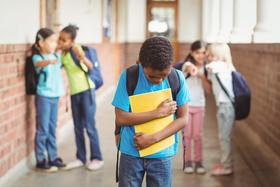
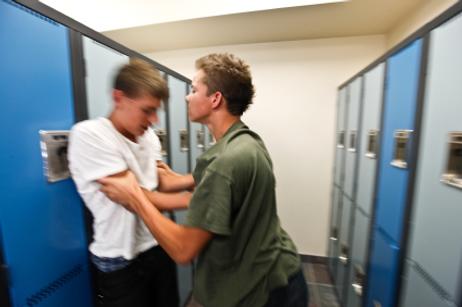
While school-based bullying has been an issue since the beginning of public school institutions, public schools today are seeking new solutions to provide all students and parents with support and guidance. Today, in an effort to educate both students who bully and those who are bullied, schools are implementing early intervention programs, social-emotional learning initiatives, and school-wide prevention strategies to combat the many issues associated with bullying in public schools.
Bullying in Public Schools: Signs and Symptoms of Problems
According to StopBullying.gov, parents and school officials can identify specific signs as indications of a bullying issue. Federal data from the National Center for Education Statistics (NCES) indicate that nearly one in five students ages 12 to 18 reports being bullied at school, with middle school students experiencing the highest rates. As the experts explain, "Children, after all, learn from what they see us do, rather than from what we say." When adults do not intervene, students who bully may feel there is nothing wrong with their actions, while students who are bullied may feel they somehow deserve the mistreatment. To prevent a negative cycle of violence and intimidation, both children and adults can identify three specific types of bullying: physical, verbal, and social (or relational).
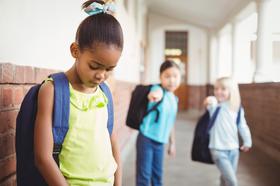
Physical bullying, as StopBullying.gov explains, is evident through behaviors such as hitting, kicking, pushing, choking, punching, or damaging another student's belongings. Verbal bullying, on the other hand, is seen through threatening, taunting, teasing, spreading rumors, and hate speech. Lastly, social bullying is often evident through a less obvious pattern of behavior. In this case, a child may be bullied by being intentionally excluded from activities or encouraged to be isolated from classmates. This does not mean that a child should not have the right to choose to play, or not to play, with another child; it does mean that children should not be allowed to systematically exclude others by saying things such as, "No one play with Mary," "No one wants to play with him," or "Don't be her friend."
Bullying can lead to serious physical and emotional ramifications. Oftentimes, the act of bullying results in the student who bullies blaming the victim for the abuse, while the student being bullied may blame himself or herself. The impacts can be deeply emotional and painful, affecting academic performance, attendance, self-esteem, and overall well-being. Parents interested in learning more about supporting their child's emotional well-being at school may also find our article on How to Support Your Child's Mental Health at School helpful.
This video offers a documentary on bullying in public schools.
Who Are the Bullies?
While bullying can occur at any location, among both female and male students, and at nearly any age, research continues to identify specific patterns of bullying behavior. Generally, however, StopBullying.gov explains that bullying is carried out by someone with more real or perceived power toward someone with less power.
Earlier studies suggested that bullying behaviors were especially common during the middle school years. More recent NCES data continue to support that conclusion, showing that students in middle school report the highest rates of bullying compared to those in high school. Bullying may include physical aggression, social ridicule, teasing, name-calling, spreading rumors, and issuing threats. While bullying can occur in kindergarten and even preschool, educators increasingly recognize the importance of addressing these behaviors early before they become established patterns.
Unlike in previous decades, schools now recognize that bullying should not be dismissed as simply a normal part of growing up. Instead, prevention efforts focus on building positive school climates, teaching empathy, encouraging students to report concerns, and helping both students who bully and those who are bullied receive appropriate support.
Stopping the Bullying: Public School Initiatives
Research continues to show that bullying prevention is most effective when parents, teachers, administrators, and students work together. While each school maintains its own specific code of conduct and disciplinary procedures, many districts now combine those policies with broader prevention programs designed to improve school climate.
Today's public schools increasingly incorporate social-emotional learning, restorative practices, anonymous reporting systems, and staff training to help students recognize bullying behaviors and respond appropriately. These initiatives aim not only to reduce bullying incidents but also to create school environments where every student feels safe, respected, and included.
Parents who would like to learn more about evaluating a school's overall approach to student safety may also enjoy reading School Safety Beyond Lockdowns: What Parents Should Review.
This video offers some suggestions as to how to deal with bullying in school.
The National Bullying Prevention Center
The National Bullying Prevention Center, operated by PACER Center, is one of the many national organizations focused on helping students learn more positive behaviors to combat bullying issues. As the organization explains, "It might seem like bullying is too big a problem to solve, but it's not. When people work together, they can accomplish great things."
To get communities, including parents and students, involved, the National Bullying Prevention Center provides articles, videos, classroom resources, and practical guidance for schools and families. Specifically, the organization recommends age-appropriate books for parents to read with their children, provides lesson plans for teachers to discuss bullying and respectful behavior, and offers activities that encourage students to become more aware of bullying issues and how to respond safely. By taking advantage of these resources, schools and families can work together to create more inclusive learning environments.
The organization also encourages older students to reach out to younger classmates, reminding young people that they can play an important role in preventing bullying and supporting students who may feel isolated.
Learn more by visiting the National Bullying Prevention Center.
Community-Based Anti-Bullying Programs
In addition to school initiatives, many community organizations have developed programs designed to reduce bullying and encourage positive youth development. Rather than focusing solely on punishment, today's evidence-based prevention programs emphasize building positive relationships, improving school climate, teaching conflict resolution skills, and encouraging students to report bullying when they see it.
Many school districts now partner with community organizations to provide mentoring opportunities, peer leadership programs, family education, and social-emotional learning activities that reinforce respectful behavior both inside and outside the classroom. These collaborative efforts seek not only to reduce bullying but also to improve attendance, strengthen student engagement, and foster healthier school communities.
Although this article focuses primarily on bullying that occurs at school, educators also recognize that cyberbullying frequently overlaps with in-person bullying. As a result, many prevention programs address both issues together, helping students understand that respectful behavior extends beyond the classroom and into online interactions.
Parents interested in evaluating whether a school promotes a healthy learning environment may also find our article on How to Spot a School Climate Problem Before Enrolling helpful.
Additional information about evidence-based bullying prevention is available from StopBullying.gov, the National Center for Education Statistics, and the Centers for Disease Control and Prevention.
This video offers anti-bullying advice for students.
Parental Involvement
To find out more about bullying issues at your child's school, speak with teachers, counselors, and administrators for information and guidance. If you are concerned about your son or daughter's safety or behavior, school counselors and administrators can discuss their school's specific bullying prevention program and explain the procedures for reporting concerns and supporting students.
Parents play an essential role in preventing bullying by maintaining open communication with their children, encouraging empathy and respectful behavior, and working closely with educators when concerns arise. Early intervention often prevents situations from escalating and helps ensure that all students receive the support they need.
Building strong relationships with teachers can also help parents stay informed about their child's school experience. You may also enjoy reading How to Build a Strong Parent-Teacher Relationship.
By working together, schools, families, and communities can help create learning environments where every student feels safe, respected, and supported.