
About Public Schools

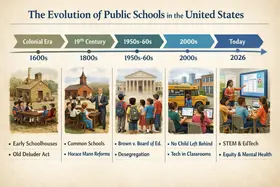
Here we cover the history of public schools, explain the various types and discuss their pros/cons. Learn more about technology on campus, health and nutrition issues, and the latest information related to a variety of student populations.

View the most popular articles in About Public Schools:

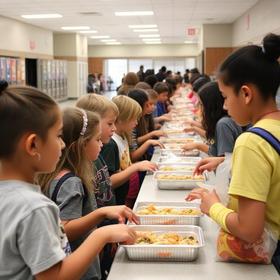
Healthy Cafeteria Options for Public School Students

Updated
|
Learn how you can help improve your child's food options in public school cafeterias.

According to recent research, only 2% of American children receive the recommended daily nutritional servings from dietary choices. In an attempt to combat such issues of poor health and malnutrition, a non-profit organization called “Action for Healthy Kids” is actively striving to improve the meals available for public school students. As WTOP News explains, Action for Healthy Kids is striving “to address the epidemic of childhood obesity, is putting pressure on schools to cut back calories and dish out healthier options to students at lunch time.”

The Unhealthy Public School Provisions

Middle and High Schools vs. Elementary Schools

According to MSNBC’s article, “Secondary Schools Serve Unhealthy Foods,” the low-nutrition foods available to middle and high school students are far less healthy than the foods provided to elementary students. According to their report, researchers have discovered that the drastic shift in healthy food options for middle and high school students not only leads to poorer overall physical health but also may be “the main difference between the lower and higher grades was the greater availability of unhealthful foods and beverages for older students.”

Ultimately, researchers assert that the overall “school ‘food environment’ is significantly healthier in lower grades.” One of the culprits leading to the unhealthy state of middle and high schools is the increasing number of vending machines in the upper education buildings. According to researchers, “while vending machines aren't automatic sources of unhealthful foods and drinks, they are -- along with a la carte cafeteria

. . .read more

International Baccalaureate (IB) Programs at Public Schools

Updated
|
The International Baccalaureate (IB) program offers an alternative to the Advanced Placement curricula at the high school. More here.

As more children of all ages are excelling in standard public school programs, many districts have implemented new curriculum pathways for accelerated learning opportunities. For students who demonstrate above-average cognitive potentials, International Baccalaureate Programs are providing gifted children with the chance to learn in an enhanced classroom with increased pace and rigor, amidst peers working at similar cognitive levels and abilities.

International Baccalaureate Programs (IB)

While each public school offers different honors and accelerated courses, International Baccalaureate programs are fully inclusive curriculum pathways. This means that, instead of only taking a few honors courses, students instead engage in a constant IB class schedule.

IB Programs are only available at specific schools; however, they are still publicly funded. Essentially, "The IB is a nonprofit educational foundation, motivated by its mission, focused on the student." Programs are available for students ranging from ages 3 to 19, to help develop the "intellectual, personal, emotional and social skills to live, learn and work in a rapidly globalizing world."

Since 1968, the IB Program has grown to work with 2,384 schools in 129 countries. Currently, 645,000 students are enrolled in the various IB Programs around the world, while being provided with three different programs: The Primary Years, The Middle Years, and The Diploma Program.

This video offers an overview of the International Baccalaureate Programme.

The Primary Years

The Primary

. . .read more

Technology in Public Schools

Updated
|
Whether you're a parent, educator, or education enthusiast, join us as we uncover the transformative potential of technology in public schools and the strategies for securing sustainable funding to ensure equal access and enhanced learning experiences for all students.

In recent years, the technology investment in public schools, ranging from K-12 institutions, has grown astronomically. According to Equity Review research, in 1998 alone, “the level of spending on educational technology at the national level was estimated at over $5 billion,” and it has grown each year in the last decade.

While each school’s budget is diverse and unique, programs have been implemented to balance the rising costs of technology and education, aiming to provide all students with equitable access to a learning environment with modern and interactive equipment.

This illuminating article delves into the dynamic landscape of technology implementation and funding in public schools. We examine the various ways technology is being integrated into educational settings, ranging from interactive whiteboards and online learning platforms to coding programs and virtual reality experiences. We also explore the challenges and opportunities associated with funding technology initiatives, considering budget constraints, equity concerns, and the evolving needs of students and educators. By showcasing real-life examples and innovative approaches, we shed light on successful models and best practices that can inspire and guide schools in their technology adoption journey. Whether you're a parent, educator, or education enthusiast, join us as we uncover the transformative potential of technology in public schools and the strategies for securing sustainable funding to ensure equal access and enhanced learning experiences for all students.

Federal Funding in Public Schools

According to the “Resource Guide to Federal Funding for Technology in Public Schools,” a five-year, $2 billion

. . .read more
Autistic Children and Public Schools

Updated
|
Learn about how children with autism can succeed in public schools.

According to the Autistic Society's research, approximately fifty children are diagnosed with autism in the United States every day. With increasing number of autistic students across the country, public schools are implementing plans to foster family support and student success.

Since federal law requires that schools provide children with the "least restrictive" environment possible, full inclusion in regular class sizes is often a beneficial pathway for children with autism.

As Abramson of the National Public Radio indicates, there are cases of children with autism who are unable to speak as they are entering early elementary school; however, with the development of inclusive programs in public schools, teachers are reporting that children often overcome social problems, speech problems, and behavioral issues while working with teachers, peers, and parental support.

While autistic students need extra help and assistance, progress is evident in public school programs across the country. Ultimately, according to Abramson, research demonstrates that the earlier children receive help with their autism, the higher the probability that they will develop effective communication skills.

The Early Signs of Autism

With currently half a million children diagnosed with autism in the United States, parents are looking to find out more about symptoms and signs of autistic behavior. However, since the development of each child is unique and variant, some professionals often may try to delay a diagnosis until signs are clear and consistent with a child's behavior to ensure the

. . .read more
Children with ADHD: Public Schools and Plans for Support

Updated
|
Learn how public schools help accomodate children with ADHD. Also read tips on how to plan for success with ADHD students.

Affecting 8% to 10% of all school-aged children in the United States, ADHD is a common behavioral disorder that often results in a child's struggle to focus his or her attention both in and outside of school.

While all kids act disruptively at times, ADHD symptoms will persist over an extended period of time, while occurring in a variety of settings. As the Nemours Foundations indicates, ADHD impairs “a child's ability to function socially, academically, and at home." With this rising trend, schools are implementing plans to support students and families to achieve both social and academic success.

This video features psychologists from the Center for Management of ADHD at The Children's Hospital of Philadelphia discussing the influence of ADHD on school performance.

Public Schools: Plans for Success with ADHD Students

  • Federal Requirements and Individual Education Plans

As required by federal law, all public schools must make certain accommodations for any child struggling with a learning or developmental disability—including children diagnosed with ADHD. In some cases, a child may benefit from an Individualized Education Plan (IEP), which would require the child, parents, and teachers to work together in planned meetings to set appropriate goals, discuss strategies for success, and implement appropriate accommodations.

While these options are available, there are still steps that must be taken prior to the implementation of any IEP or education plan. According to Doctor David Rabiner, in his article "Obtaining

. . .read more
Recent Articles

About Public Schools